Restoring form and function - Restauration de la forme et de la fonction
Face and Neck Cancer with Closure
Face and neck cancer excision with closure is a surgical procedure performed to remove cancerous tissue from the face or neck and to close and reconstruct the area using nearby tissue or sutures.
FACE AND NECKRAMQ - FUNCTIONAL
Dr Becher Alhalabi
3 min read
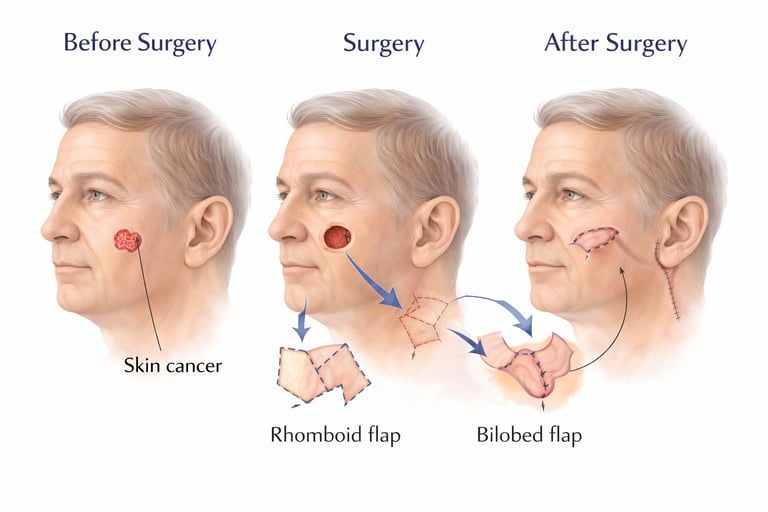
1. What Is Face and Neck Cancer Excision With Closure?
Face and neck cancer excision with closure is a surgical procedure performed to remove cancerous or suspicious tissue from the skin or soft tissues of the face or neck, followed by reconstruction (closure) of the surgical site.
The goal of surgery is to completely remove the cancer while preserving function (such as facial movement, speech, swallowing, and sensation) and achieving the best possible cosmetic outcome. Closure may be performed using direct suturing, local tissue rearrangement (flaps), or skin grafts, depending on the size and location of the defect.
This procedure is commonly performed to treat skin cancers such as basal cell carcinoma, squamous cell carcinoma, melanoma, or other tumors of the face and neck.
Most procedures are performed as day surgery, and patients usually go home the same day.
2. How the Procedure Works
Before Surgery
You will meet with your surgeon to confirm the diagnosis and discuss the surgical plan. During this visit, the following will be reviewed:
· Medical history and physical examination
· Type, size, and location of the cancer
· Results of biopsy or imaging (if applicable)
· Planned excision margins and reconstruction method
· Medications to stop or continue (especially blood thinners)
· Smoking cessation requirements
· Recovery timeline and time needed off work
· Factors that may affect healing (diabetes, smoking, vascular disease, prior radiation, etc.)
Pre-operative photographs may be taken for medical documentation.
During Surgery
· The procedure is performed under local anesthesia, regional anesthesia, or general anesthesia, depending on complexity.
· The cancer is surgically removed with an appropriate margin of surrounding tissue.
· In some cases, tissue may be sent for pathology to confirm complete removal.
· Once the cancer is removed, the defect is closed using one or more of the following:
Direct closure with sutures
Local tissue flaps (rearranging nearby skin)
Skin grafts
· Care is taken to protect nearby nerves, blood vessels, and important structures.
· Incisions are closed with sutures (which may or may not be dissolving).
· A dressing is applied.
· Surgery duration varies but typically lasts 30 minutes to several hours, depending on complexity.
After Surgery
· You will be monitored briefly in the recovery area before discharge.
· The surgical site will be covered with a dressing or bandage.
· Mild to moderate pain, tightness, or swelling is expected and managed with prescribed or over-the-counter pain medication.
· Antibiotics may be prescribed.
· Elevation of the head and avoidance of pressure on the surgical site are often recommended.
3. Postoperative Expectations
Common postoperative symptoms include:
· Swelling of the face or neck
· Bruising
· Mild to moderate pain or tightness
· Temporary numbness or altered sensation near the incision
· Redness or firmness around the surgical site
Healing is gradual, and scar appearance improves over several months.
Phase 1: Immediate Care (From Surgery Until First Follow-Up Appointment)
· Keep dressings clean and dry.
· Follow wound-care instructions provided by your surgeon.
· Avoid strenuous activity, bending, or heavy lifting.
· Sleep with your head elevated if advised.
· Watch for signs of infection (increasing redness, warmth, swelling, drainage, fever, or worsening pain).
Your first follow-up appointment is usually scheduled 5–10 days after surgery for wound assessment and dressing changes.
Suture removal may occur at 5–14 days, depending on location and suture type.
If dissolving sutures were used, mild redness or small amounts of white discharge may occur as they dissolve. Gentle cleansing with clean water is encouraged unless otherwise instructed.
Phase 2: Early Recovery (Up to 6 Weeks Post-Surgery)
· Swelling and bruising gradually decrease.
· Light daily activities may be resumed as tolerated.
· Avoid sun exposure to the surgical site.
· Scar care may begin as advised by your surgeon.
· Avoid activities that place tension on the incision.
Phase 3: Long-Term Recovery (6 Weeks and Beyond)
Scar maturation continues for several months. Scar management may include:
· Scar massage
· Moisturizing creams
· Silicone sheets or gels
· Sun protection (hat, sunscreen)
Additional treatments or surveillance appointments may be required depending on the cancer type and pathology results.
4. Risks and Possible Complications
Face and neck cancer excision with closure is generally safe but carries some risks, including:
· Infection
· Bleeding or hematoma
· Delayed wound healing
· Poor or widened scarring
· Changes in sensation or numbness
· Nerve injury (temporary or permanent)
· Asymmetry or contour irregularities
· Partial or complete flap or graft failure
· Need for additional surgery
· Cancer recurrence
5. Alternatives and Other Options
Depending on the type, size, and location of the cancer, alternatives may include:
· Observation in select cases
· Topical treatments or cryotherapy (for certain superficial lesions)
· Radiation therapy
· Non-surgical treatments (depending on cancer type)
These options may not be appropriate for all cancers and should be discussed with your surgeon.
If you are unsure about proceeding with surgery or have further questions, you are encouraged to book an additional pre-operative appointment. You always have the right to seek a second opinion—please let us know if you wish to do so.