Restoring form and function - Restauration de la forme et de la fonction
Breast Reduction / Mastopexy surgery
Reduction / mastopexy is a surgical procedure performed to reduce breast size and weight and to lift and reshape the breasts by removing excess breast tissue and skin.
BREAST /CHEST SURGERYRAMQ - FUNCTIONAL
Dr. Becher Alhalabi
7 min read
1. What Is Breast Reduction / Mastopexy?
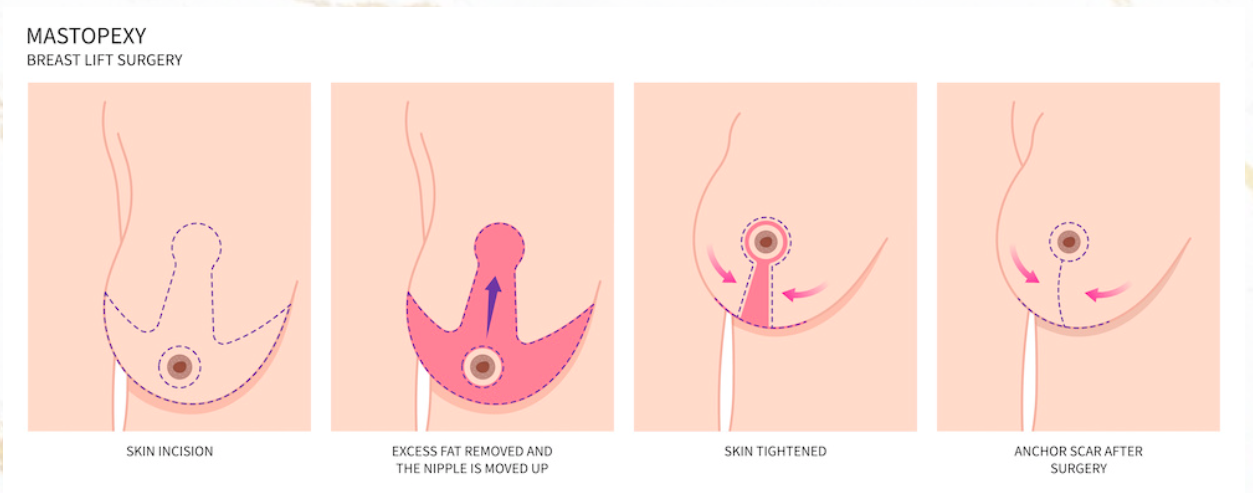
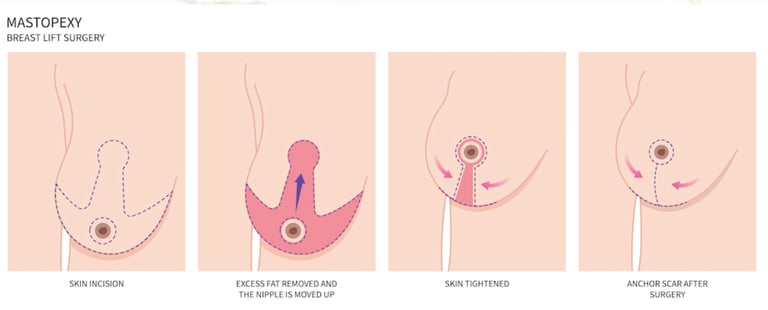
Breast reduction / mastopexy is a surgical procedure performed to reduce breast size and weight while lifting and reshaping the breasts. It involves removal of excess breast tissue, fat, and skin, and repositioning of the nipple–areola complex to a higher, more natural position.
This procedure is commonly performed to relieve physical symptoms such as neck, shoulder, and back pain, skin irritation beneath the breasts, posture problems, and limitations in daily activities. It may also improve breast shape, symmetry, and overall quality of life.
The goal of surgery is to create smaller, lighter, better-shaped breasts that are proportionate to the body while preserving nipple sensation whenever possible.
Breast reduction / mastopexy is typically performed as a day surgery, and most patients go home the same day.
2. How the Procedure Works
Before Surgery
You will meet with Dr. Alhalabi to confirm the diagnosis and discuss goals, expectations, and limitations of surgery. During this visit, the following will be reviewed:
· Medical history and physical examination
· Breast size, shape, and degree of sagging (ptosis)
· Incision pattern and surgical plan
· Medications to stop or continue
· Smoking cessation requirements
· Recovery timeline and time needed off work
· Factors that may affect healing (diabetes, smoking, obesity, vascular disease, etc.
During Surgery
· The procedure is performed under general anesthesia.
· Incisions are made on the breasts (commonly around the areola, vertically down the breast, and sometimes along the breast crease).
· Excess breast tissue, fat, and skin are removed.
· The nipple–areola complex is lifted to a higher position while maintaining blood supply whenever possible.
· The breasts are reshaped for improved contour and symmetry.
· Incisions are closed with sutures (which may or may not be dissolving).
· Dressings and a surgical bra are applied.
· Surgery duration varies but typically lasts 2–4 hours, depending on complexity.
After Surgery
· You will be monitored briefly in the recovery area before discharge.
· Your breasts will be covered with dressings and supported by a surgical bra.
· Pain, tightness, and pressure are common and managed with prescribed or over-the-counter pain medication.
· Antibiotics may be prescribed.
· Early gentle movement and walking are encouraged, but arm strain should be avoided.
3. Postoperative Expectations
Common postoperative symptoms include:
· Swelling of the breasts
· Bruising
· Pain or tightness
· Temporary numbness or changes in nipple sensation
· Fatigue
· Initial firmness or heaviness of the breasts
Recovery is gradual, and breast shape continues to evolve over several months.
Phase 1: Immediate Care (From Surgery Until First Follow-Up Appointment)
· Keep dressings clean and dry.
· Wear your surgical bra at all times unless instructed otherwise.
· Avoid lifting, pushing, or pulling with your arms.
· Sleep on your back with your upper body elevated.
· Watch for signs of infection (increasing redness, warmth, swelling, drainage, fever, or worsening pain).
Your first follow-up appointment is usually scheduled 5–10 days after surgery for wound assessment and dressing changes.
Phase 2: Early Recovery (Up to 6 Weeks Post-Surgery)
· Swelling and discomfort gradually decrease.
· Light daily activities may be resumed as tolerated.
· Avoid heavy lifting, strenuous activity, and upper-body exercise.
· Driving may resume once you are off narcotic pain medication and comfortable with arm movement.
· Continue wearing a supportive bra as directed (no underwire initially).
If dissolving sutures were used, redness around the sutures and small amounts of white discharge may occur as they dissolve. Gentle cleansing with clean water is encouraged unless otherwise instructed.
Phase 3: Long-Term Recovery (6 Weeks and Beyond)
Breast shape, softness, and sensation continue to improve over several months. Scar care is introduced:
· Scar massage
· Moisturizing creams
· Silicone sheets or gels if recommended
Return to full activity depends on healing progress and job demands.
4. Risks and Possible Complications
Breast reduction / mastopexy is generally safe and effective but carries some risks, including:
· Infection
· Bleeding or hematoma
· Delayed wound healing
· Poor or widened scarring
· Changes or loss of nipple sensation (temporary or permanent)
· Partial or complete nipple–areola compromise (rare)
· Breast asymmetry
· Fat necrosis
· Inability to breastfeed
· Persistent pain
· Need for revision surgery
5. Alternatives and Other Options
Depending on symptoms and goals, alternatives may include:
· Observation for mild symptoms
· Supportive bras and physical therapy
· Weight loss (if appropriate)
· Pain management strategies
These options do not remove excess breast tissue and may provide limited or temporary relief.
If you are unsure about proceeding with surgery or have further questions, you are encouraged to book an additional pre-operative appointment. You always have the right to seek a second opinion—please let us know if you wish to do so.
1. Qu’est-ce qu’une réduction mammaire /mastopexie?
La réduction mammaire / mastopexie est une intervention chirurgicale réalisée pour diminuer la taille et le poids des seins tout en les remontant et en les remodelant. Elle consiste à retirer l’excès de tissu mammaire, de graisse et de peau, et à repositionner le complexe mamelon–aréole à une position plus élevée et plus naturelle.
Cette intervention est couramment réalisée pour soulager des symptômes physiques tels que les douleurs au cou, aux épaules et au dos, l’irritation cutanée sous les seins, les problèmes de posture et les limitations dans les activités quotidiennes. Elle peut également améliorer la forme des seins, leur symétrie et la qualité de vie globale.
L’objectif de la chirurgie est d’obtenir des seins plus petits, plus légers et mieux formés, proportionnés au corps, tout en préservant la sensibilité du mamelon lorsque possible. La réduction mammaire / mastopexie est généralement réalisée en chirurgie d’un jour, et la plupart des patientes rentrent à la maison le jour même.
2. Déroulement de l’intervention
Avant la chirurgie
Vous rencontrerez le Dr Alhalabi afin de planifier la chirurgie et discuter de vos objectifs.
Antécédents médicaux et examen physique
Taille, forme des seins et degré de ptose
Type d’incision et plan chirurgical
Médicaments à arrêter ou à poursuivre
Exigences concernant l’arrêt du tabac
Délai de récupération et durée d’arrêt de travail
Facteurs pouvant affecter la guérison (diabète, tabagisme, obésité, maladie vasculaire, etc.)
Pendant la chirurgie
L’intervention est réalisée sous anesthésie générale.
Des incisions sont pratiquées sur les seins (le plus souvent autour de l’aréole, verticalement sur le sein, et parfois au niveau du sillon sous mammaire).
L’excès de tissu mammaire, de graisse et de peau est retiré.
Le complexe mamelon–aréole est remonté à une position plus élevée, en préservant l’apport sanguin lorsque possible.
Les seins sont remodelés afin d’améliorer leur contour et leur symétrie.
Les incisions sont refermées à l’aide de sutures (résorbables).
Des pansements et un soutien-gorge chirurgical sont appliqués.
La durée de l’intervention varie, mais elle est généralement de 2 à 4 heures selon la complexité.
Après la chirurgie
Vous serez brièvement surveillé(e) en salle de réveil avant votre congé.
Vos seins seront recouverts de pansements et soutenus par un soutien-gorge chirurgical.
La douleur, la sensation de tension et de pression sont fréquentes et sont contrôlées à l’aide de médicaments prescrits ou en vente libre.
Des antibiotiques peuvent être prescrits.
Une mobilisation précoce et douce ainsi que la marche sont encouragées, mais les efforts avec les bras doivent être évités.
3. Suites opératoires attendues
Un gonflement, une inflammation et une sensation de tension au niveau de la poitrine sont fréquents dans les jours et les semaines suivant la chirurgie. Il s’agit d’une partie normale du processus de guérison.
La guérison se déroule en trois phases principales, chacune comportant des consignes et des objectifs spécifiques.
Phase 1 : soins immédiats (jusqu’au premier suivi)
Ne pas toucher ni retirer les pansements ou les bandes sur les incisions sauf indication de votre médecin.
Maintenir la région opérée propre et sèche. Vous pouvez vous doucher en évitant de mouiller la poitrine.
Dormir avec le haut du corps surélevé (2 oreillers) afin de réduire l’enflure.
Éviter de soulever des charges, les mouvements des bras au-dessus de la tête et toute activité intense.
Si ce n’est pas déjà fait, porter un soutien-gorge médical ou de sport qui s’ouvre à l’avant.
Le premier rendez-vous de suivi est généralement prévu entre 7 et 14 jours après la chirurgie afin d’évaluer la guérison et dépister d’éventuelles complications.
Phase 2: récupération précoce (jusqu’à 6 semaines)
L’enflure et l’inflammation diminuent.
Les incisions poursuivent leur cicatrisation.
Continuer de porter le soutien-gorge postopératoire tel que recommandé.
Continuer de dormir avec le haut du corps surélevé.
Si des sutures résorbables ont été utilisées, une rougeur autour des points et un léger écoulement blanchâtre peuvent survenir lors de leur résorption. Un nettoyage doux à l’eau propre est recommandé, sauf indication contraire.
Phase 3 : récupération à long terme (6 semaines et plus)
Vers la 6e semaine, la plupart des patientes entament la phase finale de récupération :
Soins des cicatrices : le massage des cicatrices est discuté et réalisé avec des crèmes hydratantes afin d’optimiser leur maturation. Des feuilles de silicone, des onguents ou d’autres traitements peuvent être utilisés ou prescrits.
Massage : des techniques de massage doux peuvent être introduites afin de réduire la sensation de tension et améliorer la souplesse des tissus.
Soutiens-gorge : transition vers des soutiens-gorge de maintien à long terme ou de compression.
4. Risques et complications possibles
La réduction mammaire / mastopexie est généralement sécuritaire et efficace, mais comporte certains risques, notamment :
Infection
Saignement ou hématome
Retard de cicatrisation
Cicatrices de mauvaise qualité ou élargies
Modification ou perte de la sensibilité du mamelon (temporaire ou permanente)
Atteinte partielle ou complète du complexe mamelon–aréole (rare)
Asymétrie mammaire
Nécrose graisseuse
Incapacité d’allaiter
Douleur persistante
Nécessité d’une chirurgie de révision
5. Alternatives et autres options
Selon les symptômes et les objectifs, les alternatives peuvent inclure :
Observation en cas de symptômes légers
Soutiens-gorge de soutien et physiothérapie
Perte de poids (si approprié)
Stratégies de gestion de la douleur
Ces options ne permettent pas d’enlever l’excès de tissu mammaire et peuvent offrir un soulagement limité ou temporaire.
Si vous n’êtes pas certain(e) de l’intervention ou si vous avez d’autres préoccupations ou questions, n’hésitez pas à prendre un rendez-vous préopératoire supplémentaire. Si vous êtes toujours indécis(e), vous avez le droit d’obtenir un second avis auprès d’un autre spécialiste; veuillez nous en informer.